1018 vs. 12L14 Steel: Round Bar Comparison for Machined Parts
1018 is a low-carbon steel used across forming, welding, and machining routes. 12L14 is a leaded, resulfurized free-machining grade selected when cutting performance drives the program.
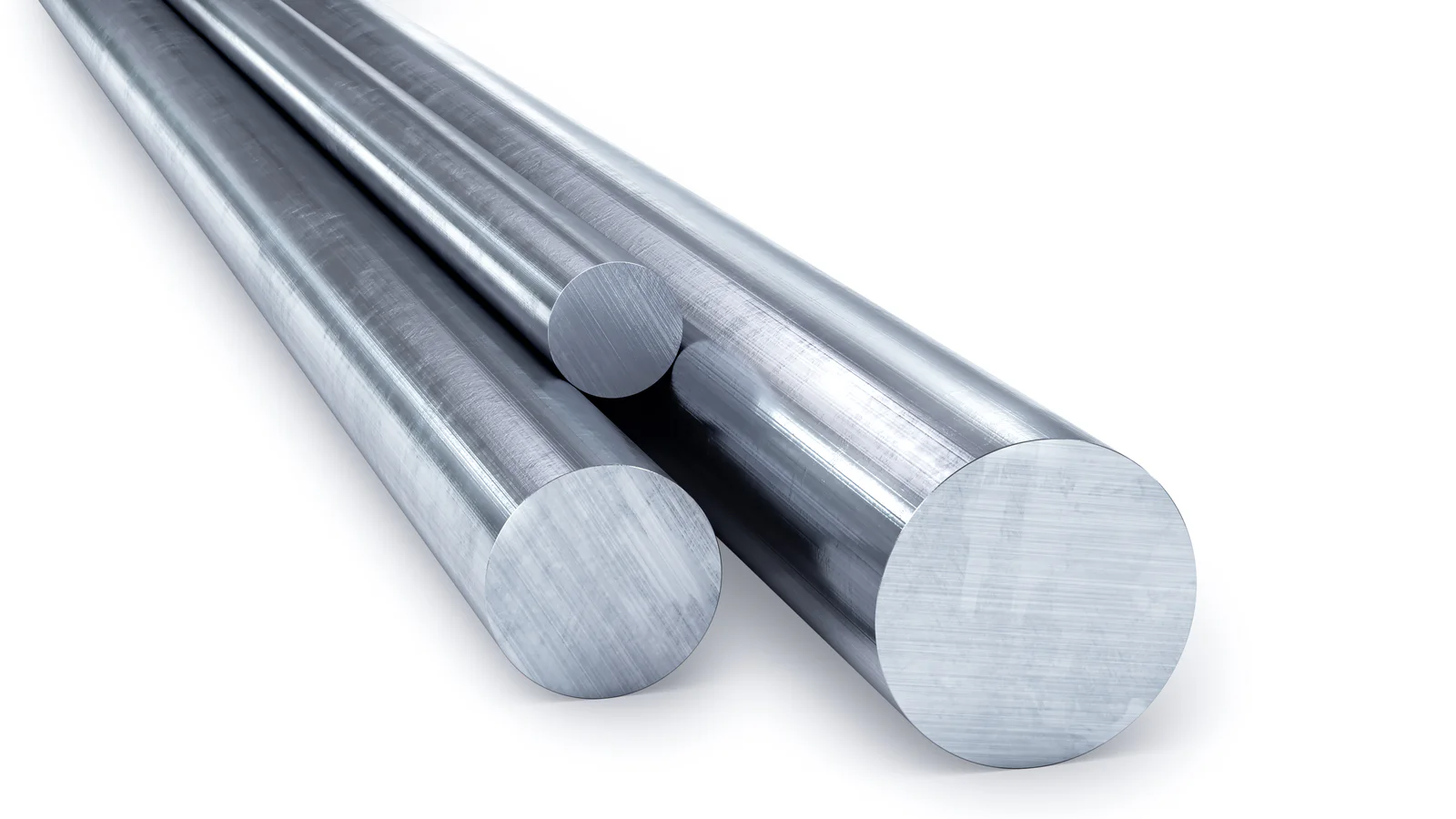
1018 and 12L14 can both arrive at a screw machine or CNC lathe, but they are not interchangeable. 1018 is a low-carbon steel used where forming, welding, and general fabrication remain part of the plan. 12L14 is a leaded, resulfurized grade designed around free-machining behavior.
For a high-volume program, the decision is often total part cost versus material and application restrictions. Faster machining does not help if the grade conflicts with welding, forming, coating, regulatory, or end-use requirements.
Buyer takeaway: Evaluate 12L14 when machining cycle time and chip control justify a leaded free-machining grade and the part specification permits it. Use 1018 when the manufacturing route needs a more conventional low-carbon steel. Get design and compliance approval before changing either grade.
1018 vs. 12L14 at a glance
| Decision | 1018 round bar | 12L14 round bar |
|---|---|---|
| Grade type | Low-carbon steel | Leaded, resulfurized free-machining steel |
| Primary advantage | Forming and welding flexibility | Chip control and cutting performance |
| Machining | General-purpose behavior varies by condition | Developed specifically for production machining |
| Welding/forming | Commonly evaluated for these routes | Lead and sulfur additions make these routes restrictive and application-specific |
| Compliance | Conventional carbon-steel controls | End-use, workplace, recycling, coating, and customer restrictions must be checked |
| Common mistake | Assuming low carbon means identical properties in every finish | Selecting by machinability without reviewing the complete product lifecycle |
Why 12L14 cuts differently
ASTM A576-25 lists 12L14 among rephosphorized and resulfurized carbon-steel grades and identifies lead as part of the chemistry. Those additions support chip formation and machining performance, especially in repetitive turning and screw-machine work.
SAE J403 identifies SAE carbon-steel chemistry requirements. Chemistry still does not guarantee cycle time. Cold work, hardness, straightness, diameter tolerance, surface, tooling, speed, feed, coolant, and operation all affect output.
When 1018 is the stronger manufacturing choice
1018 may be preferable when the part will be bent, upset, swaged, welded, cold formed, or used in an application that restricts lead. It is also a common general-machining grade when maximum cutting speed is not the only objective.
The lower material price does not automatically mean lower part cost. A production comparison should include tool life, cycle time, chip handling, bar yield, secondary operations, scrap segregation, and quality losses.
Lead content changes the approval process
12L14 should be treated as a deliberately leaded material. Before approval, review:
- customer and end-market material restrictions;
- worker-exposure controls for machining and finishing;
- chip, coolant, and scrap handling;
- recycling-stream requirements;
- plating, coating, heat-treatment, and cleaning compatibility;
- welding and thermal-processing restrictions;
- required declarations or material reporting.
This is a purchasing and manufacturing-control issue, not a reason to make unsupported claims about every possible use. The responsible environmental, health and safety, engineering, and customer-compliance teams should approve the actual application.
Compare the supplied bar—not just chemistry
ASTM A108-24 covers cold-finished carbon and alloy steel bars. That matters because many bar-fed applications depend on straightness, diameter tolerance, surface, and mechanical properties developed by the finishing route.
Compare:
- cold-drawn, turned, ground, or other supplied form;
- ordered diameter and tolerance;
- straightness over the usable length;
- hardness and mechanical properties by size;
- surface-discontinuity limits;
- bar-end and chamfer requirements;
- packaging and rust-prevention requirements.
RFQ checklist for bar-fed production
Provide:
- 1018 or 12L14 and the governing specification.
- Diameter, tolerance, straightness, surface, length, and ends.
- Supplied condition and required mechanical properties.
- Total quantity, release size, and annual usage context.
- Machine type, bar-feed length, and critical operations.
- Welding, forming, coating, heat-treatment, and end-use restrictions.
- MTR, traceability, marking, packaging, and delivery details.
Review the 1018 and 12L14 grade pages. Once the grade and product form are approved, submit the production scope through Request Pricing.
Source Record
Primary and industry sources reviewed for this article:
- SAE J403_202402: Chemical Compositions of SAE Carbon Steels SAE International · Accessed August 13, 2026
- ASTM A108-24: Steel Bar, Carbon and Alloy, Cold-Finished ASTM International · Accessed August 13, 2026
- ASTM A576-25: Steel Bars, Carbon, Hot-Wrought, Special Quality ASTM International · Accessed August 13, 2026
Carbon & alloy round bar
Quote the Exact Material Requirement
Send the grade or specification, diameter and length, supply condition, quantity, testing, required date, and ship-to location for review.
Request Pricing