4130 vs. 4140 Steel: Solid Round Bar Comparison for Buyers
4130 and 4140 share a chromium-molybdenum alloy family, but 4140's higher carbon level changes its hardening and strength potential. The correct choice depends on the part and supplied condition.
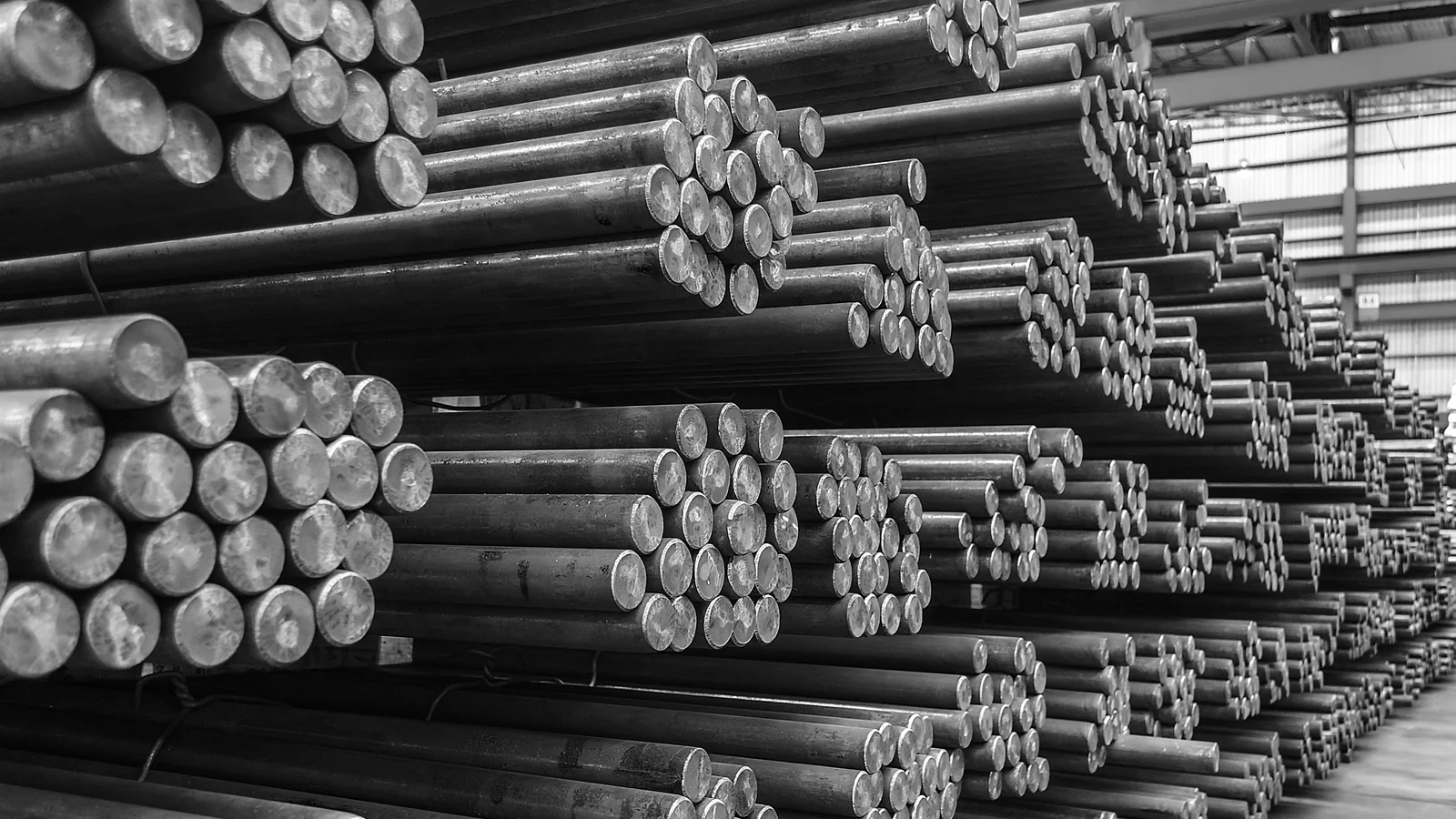
4130 and 4140 are both chromium-molybdenum alloy steels. The useful difference is carbon level: 4130 has a lower nominal carbon level, while 4140 has more hardening and strength potential. That affects welding review, heat treatment, section response, and the property levels commonly pursued.
This guide concerns solid round bar. Many online 4130 comparisons are really about thin-wall tubing, aircraft structures, or racing fabrication. Those use cases should not be carried over to production bar without checking the product form and specification.
Buyer takeaway: Evaluate 4130 when lower carbon supports the required fabrication and property route. Evaluate 4140 when the part needs greater hardening response or a higher controlled strength level. Neither grade is a drop-in substitute.
4130 vs. 4140 at a glance
| Decision | 4130 round bar | 4140 round bar |
|---|---|---|
| Alloy family | Chromium-molybdenum | Chromium-molybdenum |
| Carbon level | Lower | Higher |
| Hardening potential | Lower than 4140 under comparable conditions | Greater under comparable conditions |
| Welding review | Lower carbon can be advantageous, but procedure still controls | Higher carbon and strength condition increase procedure sensitivity |
| Typical buying question | Can the grade meet the design while preserving fabrication flexibility? | Can the grade meet the required section and heat-treated property package? |
| Common mistake | Applying tubing guidance to solid bar | Assuming every 4140 bar arrives heat treated |
The grade name defines chemistry—not delivered strength
SAE J404 identifies the chemical compositions of SAE alloy steels. The last two digits broadly distinguish the nominal carbon level within this alloy family, but they do not define a finished hardness or tensile property.
Hot-rolled, annealed, normalized, cold-finished, and quenched-and-tempered bars can produce different results in either grade. Compare both materials in the same product form and supplied condition.
Which grade is stronger?
4140 has greater hardness and strength potential because of its higher carbon level, but a specific 4130 bar can be stronger than a specific 4140 bar if the conditions differ. If the drawing requires a mechanical-property level, put it on the RFQ with the specification, section, and test basis.
For large rounds, do not assume a surface test represents the center. Diameter, chemistry within range, prior structure, quench, temper, and test location affect the property profile.
Welding and fabrication
4130 is often discussed where welding is part of the manufacturing route. Lower carbon can improve the welding outlook relative to 4140, but it does not eliminate the need for a qualified procedure. Bar diameter, restraint, joint geometry, filler, hydrogen control, preheat, interpass temperature, and post-weld requirements remain application-specific.
4140 can also be welded under engineered procedures, but the higher carbon level and any high-strength supplied condition raise the consequences of uncontrolled practice. Identify welding on the material inquiry before purchasing.
Heat treatment and machining
4140 is commonly evaluated for quenched-and-tempered parts and demanding shafts because of its hardening response. 4130 may satisfy lower property levels or fabrication-heavy designs. The correct choice depends on finished section, load, toughness, fatigue, and processing—not application name alone.
Machining comparisons must use the actual incoming hardness and microstructure. A lower-carbon grade is not automatically faster to machine, and a heat-treated 4140 program may reduce later processing even if cutting data are more conservative.
Product standards and order details
ASTM A322-24 covers hot-wrought standard alloy bars. ASTM A108-24 covers cold-finished carbon and alloy bars. Cite the product standard that matches the required form, then add any mechanical, surface, dimensional, and inspection requirements.
For a production RFQ, provide:
- 4130 or 4140 and governing specification.
- Solid round bar form and supplied condition.
- Diameter, length, quantity, releases, and delivery.
- Required mechanical properties or hardness with test location.
- Tolerance, straightness, surface, decarburization, and machining allowance.
- Welding, forging, heat treatment, and finished-part context.
- MTR, traceability, marking, and supplemental testing.
Review the 4130 and 4140 grade pages. When the complete bar requirement is approved, submit it through Request Pricing.
Source Record
Primary and industry sources reviewed for this article:
- SAE J404_200901: Chemical Compositions of SAE Alloy Steels SAE International · Accessed August 13, 2026
- ASTM A322-24: Steel Bars, Alloy, Standard Grades ASTM International · Accessed August 13, 2026
- ASTM A108-24: Steel Bar, Carbon and Alloy, Cold-Finished ASTM International · Accessed August 13, 2026
Carbon & alloy round bar
Quote the Exact Material Requirement
Send the grade or specification, diameter and length, supply condition, quantity, testing, required date, and ship-to location for review.
Request Pricing