Hot-Rolled vs. Cold-Finished Round Bar: What Buyers Should Compare
The better starting form depends on the finished part and manufacturing route. Surface, tolerance, straightness, cleanup stock, residual stress, and total yield all belong in the comparison.
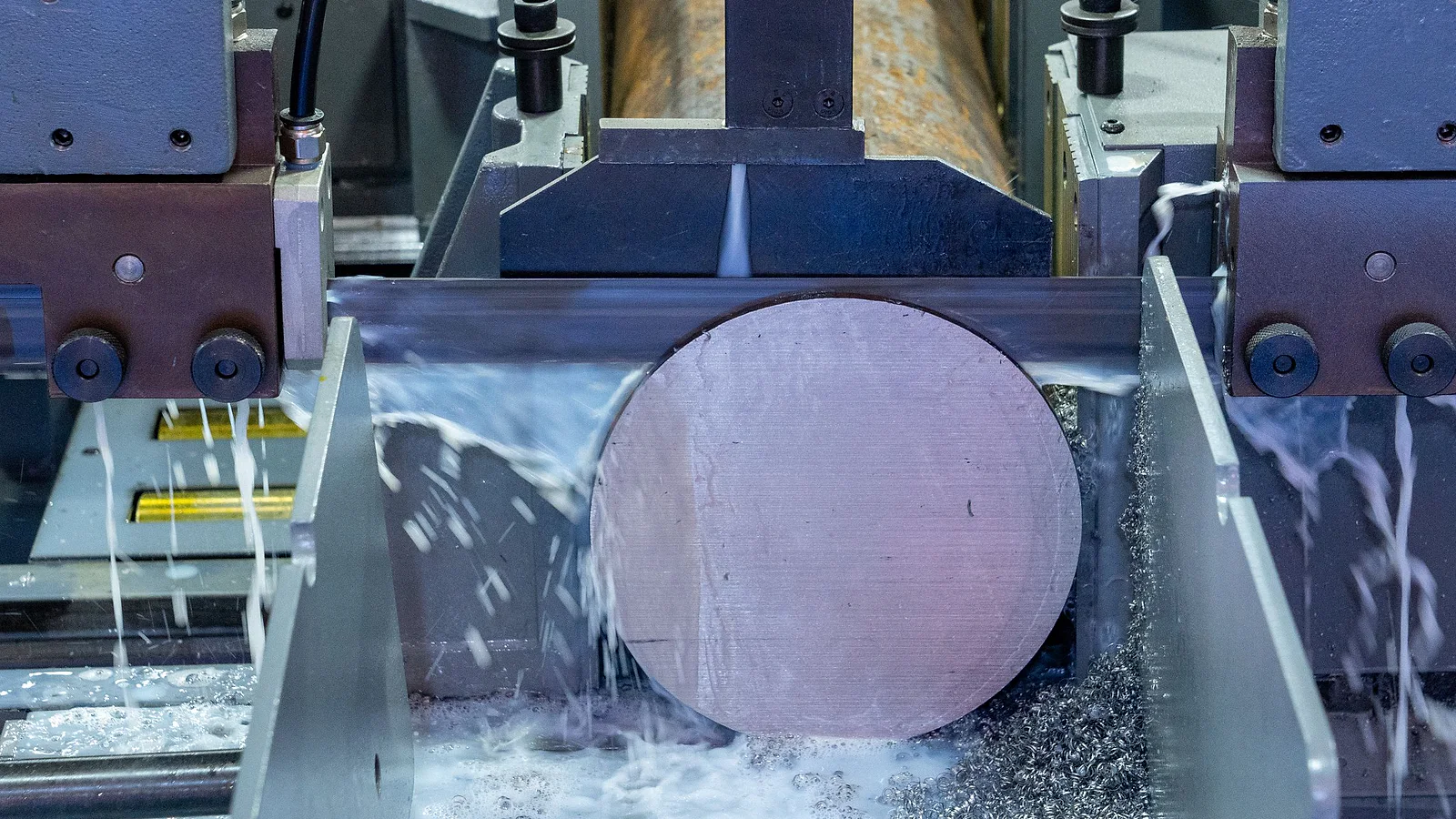
Hot-rolled and cold-finished round bar can carry the same nominal grade while arriving with materially different surface, dimensional, and processing characteristics. The right choice depends on what the buyer needs the starting bar to do before it becomes a finished component.
Buyer takeaway: Compare total conversion cost, not material price alone. Bar cost, machining time, cleanup allowance, yield, straightening, handling, and scrap exposure can move the answer in either direction.
What hot-rolled round bar means
Hot-rolled bar is shaped at elevated temperature and normally retains an as-rolled surface. It is widely used as starting stock for forging, heat treatment, cold finishing, machining, and structural or industrial components.
For many high-volume parts, hot-rolled bar is the practical route when:
- the process already removes sufficient material from the outside diameter;
- the ordered size provides adequate cleanup stock;
- the applicable hot-wrought specification and purchase order provide acceptable dimensional and surface requirements;
- forging or another conversion operation makes a bright starting surface unnecessary; or
- the total yield remains favorable after scale and surface removal.
Hot rolled does not mean “uncontrolled.” Diameter, ovality, straightness, length, surface, chemistry, and any special requirements still have to follow the governing order and specification.
What cold-finished round bar means
Cold-finished is a family of additional processing routes applied after hot rolling. ASTM A108-24 covers cold-finished carbon and alloy steel bars and includes several finishing and heat-treatment routes within its scope.
Cold drawing reduces the bar through a die without reheating it to hot-working temperature. Turning removes the outer layer. Grinding can further control diameter and surface. Polishing improves the surface after turning or grinding.
Nucor’s cold-finished bar guidance associates cold finishing with improved surface, straightness, dimensions, mechanical characteristics, and machinability, but the exact result depends on the grade, size, process, heat treatment, and ordered requirements.
Six purchasing differences that matter
1. Diameter and ovality
Cold-finished routes are commonly selected when the process needs closer starting-size control. That can reduce rough-turning stock or help a bar-fed process, but the buyer still has to state the applicable tolerance rather than assume every cold-finished bar is identical.
2. Surface condition
Hot-rolled bar normally carries mill scale and an as-rolled surface. Turning or peeling removes the outside layer; grinding and polishing can refine it further. Surface appearance alone does not prove that a required defect or decarburization limit has been met.
3. Straightness
Straightness affects bar feeders, long turning operations, centerless processing, shaft runout, and the ability to hold finished stock. State the controlling straightness requirement and how it will be measured.
4. Mechanical response
Cold work can change mechanical characteristics and residual stress. Heat treatment before or after finishing can change them again. Do not transfer properties from an online grade table to an order without matching the product form, size, condition, and test basis.
5. Machining allowance
Hot-rolled bar often needs more cleanup stock. Cold-finished or turned bar may reduce that allowance, but the finished geometry, surface requirements, decarburization limits, straightness, and process capability control how much stock is actually necessary.
6. Total yield and throughput
A lower raw-bar price can be offset by additional chips, longer cycle time, straightening, or failure to clean up. A higher-cost processed bar can be unnecessary when the operation already forges or rough-machines the entire surface. Model both routes using the actual part and annual volume.
Which form should a buyer quote?
Quote hot-rolled bar when the downstream process can economically absorb the as-rolled surface and dimensional route. Evaluate cold-finished, turned, or ground bar when a controlled starting diameter, surface, straightness, or reduced stock-removal requirement creates measurable production value.
For either route, state:
- grade and governing specification;
- diameter, length, quantity, and tolerances;
- thermal and surface condition;
- minimum cleanup size or machining allowance where applicable;
- straightness, ovality, surface, and end requirements;
- testing, certification, and traceability;
- downstream forging, machining, heat treatment, coating, or grinding route.
The round bar tolerance guide covers the dimensional fields that should accompany the form decision. For processed-bar terminology, see the turned, polished, and ground bar guide.
Do not substitute form without reviewing the process
A cold-finished bar is not automatically a drop-in replacement for a hot-rolled size, and hot-rolled stock is not automatically an economical substitute for a cold-finished requirement. Changed diameter, surface, residual stress, properties, straightness, or cleanup stock can affect tooling and finished yield.
Treat form changes as a controlled purchasing and manufacturing decision. The drawing, process plan, applicable specification, and accepted quotation should all describe the same starting product.
Source Record
Primary and industry sources reviewed for this article:
- Cold-Finished Steel Bar FAQs Nucor · Accessed August 11, 2026
- ASTM A108-24: Steel Bar, Carbon and Alloy, Cold-Finished ASTM International · Accessed August 11, 2026
- ASTM A322-24: Steel Bars, Alloy, Standard Grades ASTM International · Accessed August 11, 2026
- Hot Rolled Bars Gerdau · Accessed August 11, 2026
Carbon & alloy round bar
Quote the Exact Material Requirement
Send the grade or specification, diameter and length, supply condition, quantity, testing, required date, and ship-to location for review.
Request Pricing