Round Bar Straightness and Diameter Tolerance: A Buyer Guide
Nominal diameter does not define the acceptance window. Product form, size, grade, condition, governing specification, and the finished process all affect the tolerance package.
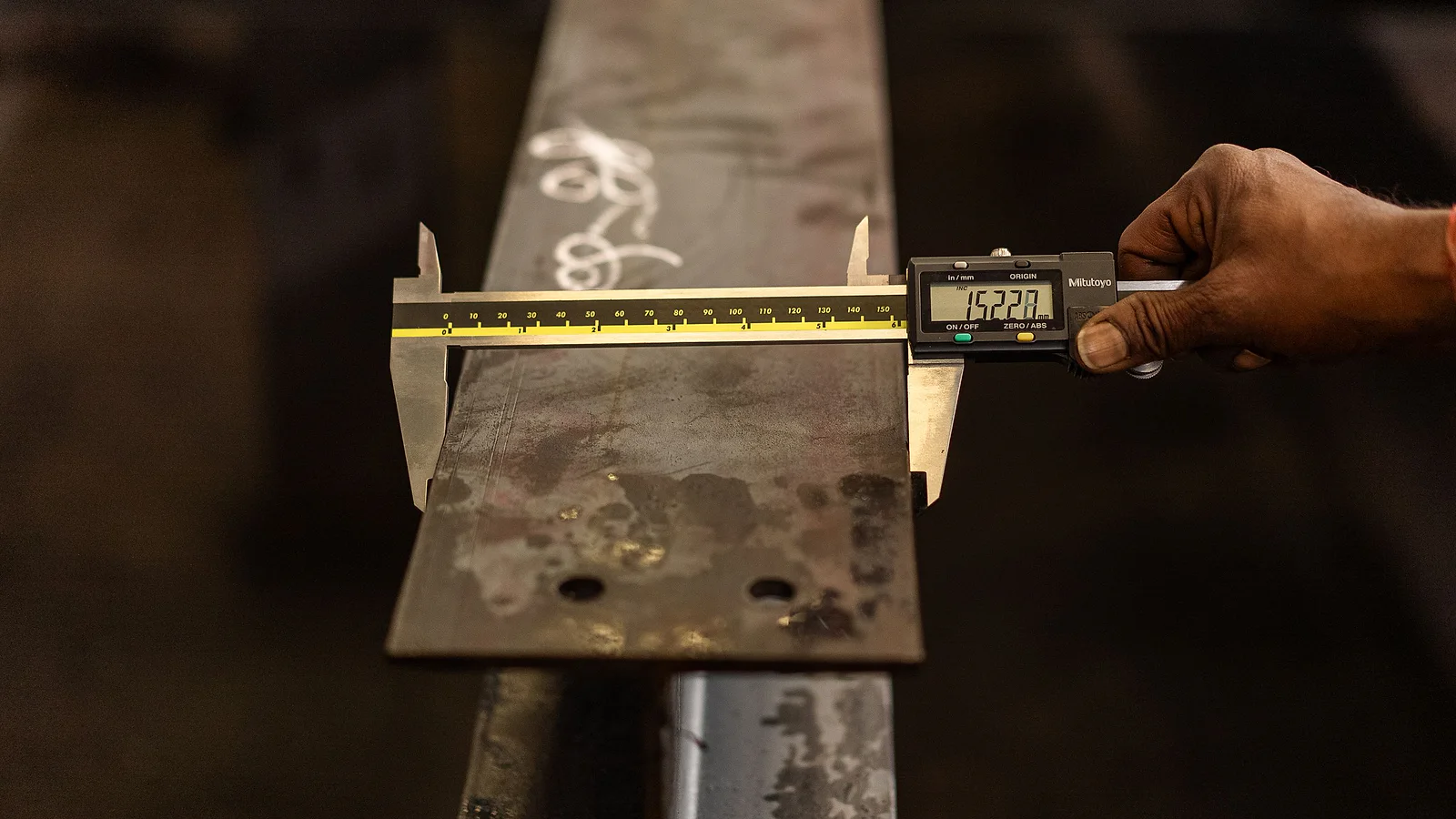
Round bar tolerance is a package of related requirements—not one number. Diameter, ovality, straightness, length, end condition, surface, and minimum cleanup size can each affect whether production receives usable starting stock.
Buyer takeaway: State the governing specification and the exact dimensional characteristics that matter to the process. “Standard tolerance” is not a reliable RFQ instruction.
Nominal diameter is not the measured diameter
A nominal bar diameter identifies the ordered size. The acceptable measured range comes from the applicable product specification, form, grade or carbon range where relevant, size band, finishing route, and any purchase-order additions.
The tolerance route for hot-rolled bar is not automatically the same as cold-drawn, turned and polished, or turned, ground and polished bar. ASTM A108-24 covers multiple cold-finished bar routes, while producer handbooks publish separate product tables and finishing information.
When a finished part is close to the starting diameter, both sides of the tolerance matter. An undersize area may fail to clean up. Excess stock may increase cycle time and chips across thousands of parts.
Diameter, ovality, and cleanup are different requirements
Diameter tolerance controls measured size at defined locations.
Ovality or out-of-round addresses variation around a cross section. A bar can have measurements that fall inside a broad diameter window yet still create problems if the difference around the circumference exceeds the process allowance.
Minimum cleanup size asks a different question: after accounting for bar size, surface condition, decarburization, straightness, and setup, can the process produce a clean finished diameter?
Do not assume a diameter tolerance guarantees cleanup. If cleanup controls the order, state the minimum finished size or agreed stock allowance and how it will be evaluated.
Why straightness matters to production buyers
Straightness can affect:
- automatic bar feeders and guides;
- saw or shear blank consistency;
- long turning and boring operations;
- centerless turning, grinding, or polishing;
- runout and stock distribution on a shaft;
- handling and bundle stability;
- the amount of corrective straightening required before machining.
A straightness statement needs a basis: maximum deviation over what length, measured by what method, at what processing stage, and under what support conditions. A buyer should not combine a per-length limit with a full-bar expectation unless the controlling documents do so.
Length and end condition also affect yield
Bar length determines pieces per bar, remnant, bundle weight, handling, and sometimes truck loading. State standard mill length, random length, multiple length, or exact cut length as applicable, together with permitted variation.
End requirements can include saw cut, shear cut, chamfer, deburr, squareness, or discard. Nucor’s cold-finished FAQ notes that chamfering is not automatic for every cold-finished round and should be requested when required for feeding or handling.
For cut blanks, length tolerance, end squareness, burr condition, and identification may be more important than the full-bar tolerance that applied before cutting.
Do not copy a tolerance chart without matching the product
Online tolerance charts are easy to misuse. Before applying a number, confirm:
- The standard and edition.
- Hot-rolled or cold-finished product form.
- Round, square, hex, or another shape.
- Grade or carbon/alloy grouping if the table distinguishes it.
- Nominal size band.
- Thermal and surface condition.
- Whether the value is diameter, ovality, straightness, length, or another characteristic.
- Whether supplementary or customer requirements modify the base rule.
Gerdau’s May 2026 product handbook places bar tolerances and hot-rolled straightness in specific SBQ product sections. That structure is a reminder that the correct table depends on the actual offered product.
What to put on the RFQ
For a tolerance-sensitive round bar order, provide:
- nominal diameter and unit system;
- applicable standard and edition;
- diameter tolerance or invoked table;
- ovality limit where separately required;
- straightness basis and measurement length;
- bar length and tolerance;
- end condition and chamfer/deburr requirement;
- surface condition and permitted repair;
- minimum cleanup size or machining allowance;
- inspection extent, report, and disposition rule;
- quantity and permitted variation.
The round bar RFQ checklist connects these dimensional fields to grade, condition, inspection, and traceability.
Measure the requirement that protects the process
Not every order needs the tightest possible tolerance. Tighter limits can add processing, sorting, inspection, scrap, and cost. The useful requirement is the one that protects finished yield and process capability without controlling characteristics that do not matter.
Start with the finished part and manufacturing route. Work backward to the starting diameter, cleanup stock, straightness, length, and end condition that production actually needs, then place those requirements in the accepted order.
Source Record
Primary and industry sources reviewed for this article:
- ASTM A108-24: Steel Bar, Carbon and Alloy, Cold-Finished ASTM International · Accessed August 11, 2026
- Product Handbook, Version 2.3 Gerdau · Accessed August 11, 2026
- Cold-Finished Steel Bar FAQs Nucor · Accessed August 11, 2026
- Steel Bar Inspection Requirements for RFQ JOTAIN Materials · Accessed August 11, 2026
Carbon & alloy round bar
Quote the Exact Material Requirement
Send the grade or specification, diameter and length, supply condition, quantity, testing, required date, and ship-to location for review.
Request Pricing