4140 Round Bar Buying Guide: Size, Condition, Tolerance, and Testing
A request for “4140 round bar” identifies an alloy chemistry family, not a complete delivered product. Condition, section, properties, form, and acceptance evidence still have to be defined.
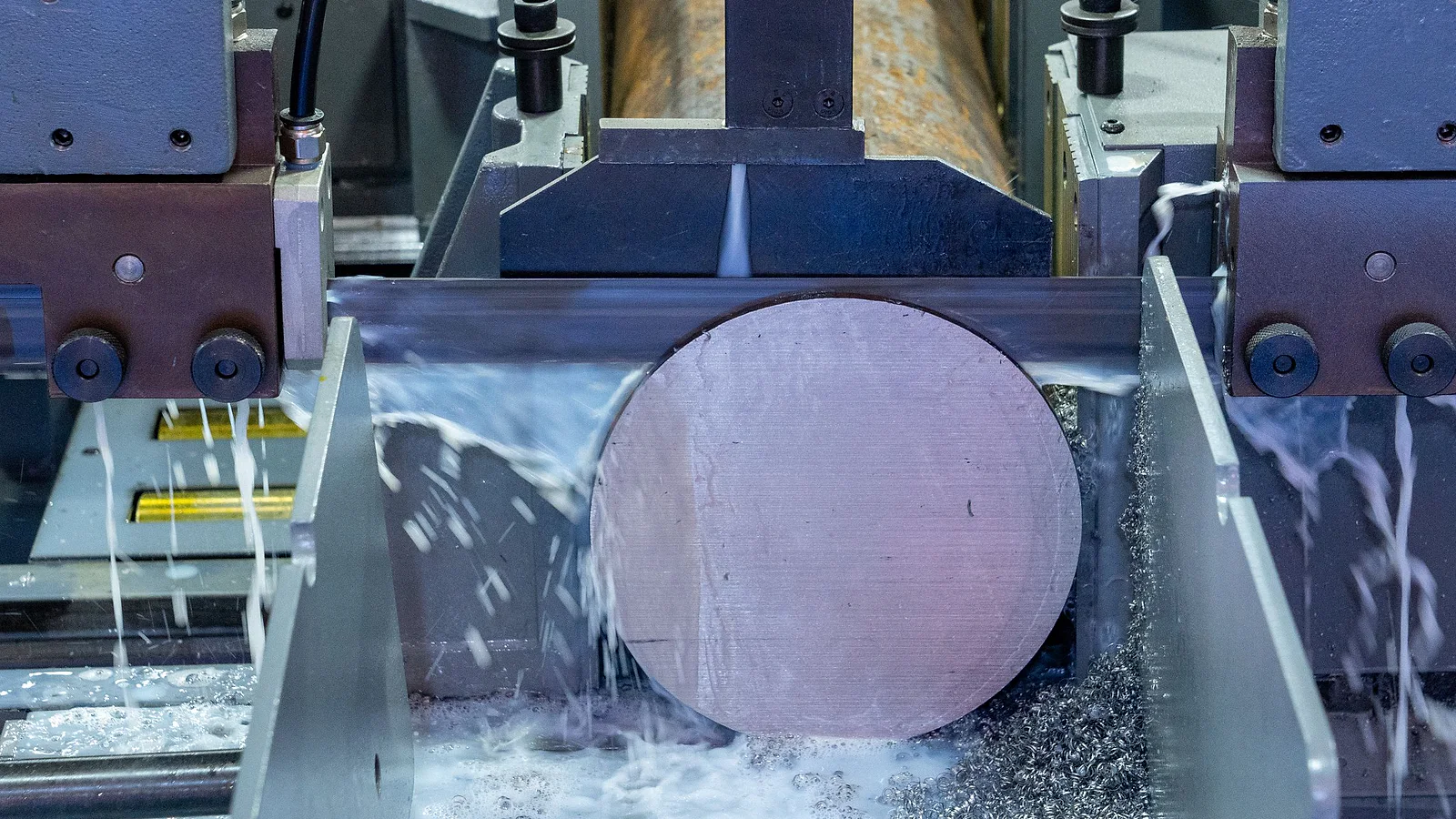
4140 is one of the most frequently requested alloy steel grades, but “4140 round bar” is not a complete purchase description. The grade identifies a chromium-molybdenum alloy chemistry route; the order still needs to establish what physical bar will be delivered and how it will be accepted.
Buyer takeaway: Specify the governing product standard, ordered size, product form, heat-treatment condition, property basis, tolerances, surface requirements, testing, certification, quantity, and delivery. Do not buy from a generic 4140 property table.
Start with the governing specification
SAE J404 identifies SAE alloy-steel chemistries. Chemistry alone does not define one universal hardness, tensile strength, toughness, diameter tolerance, surface condition, or inspection level.
Depending on the application, the order may invoke an ASTM bar specification, an AMS specification, a customer document, or a drawing-controlled requirement. ASTM A322-24, for example, covers hot-wrought standard alloy steel bars and recognizes additional surface, chemical, metallurgical, heat-treatment, or finish requirements when specified.
Never treat commercial 4140 and a separately controlled specification as equivalent merely because both use the number 4140.
Define the product form
Common purchasing routes include:
- hot-rolled round bar;
- cold-drawn round bar;
- turned or peeled bar;
- turned and polished bar;
- turned, ground and polished bar;
- heat-treated bar supplied through an applicable property specification.
Each route changes the starting surface, dimensional expectation, potential cleanup stock, and processing cost. The hot-rolled versus cold-finished guide explains the tradeoff.
State the condition—not just “4140 prehard”
4140 may be quoted in annealed, normalized, quenched-and-tempered, or other controlled conditions. Commercial shorthand such as “prehard” can be useful in conversation, but an acceptance document should state the applicable specification and required hardness or mechanical-property route.
For heat-treated bar, clarify:
- ordered diameter and heat-treatment section;
- required property or hardness range;
- specimen location and orientation when controlled;
- heat-treatment lot and test frequency;
- whether straightening occurs before or after heat treatment;
- surface decarburization and scale requirements;
- records required with the shipment.
The required response through a large section cannot be inferred from a small test coupon or a generic web value unless the governing specification establishes that representation.
4140 round bar sizes: ask the commercial question precisely
Online searches for “4140 round bar sizes” often lead to stock charts. A serious inquiry should distinguish:
- mill production range;
- service-center stock range;
- hot-rolled versus cold-finished range;
- standard versus special diameter;
- full-length bar versus cut blanks;
- minimum order and production quantity;
- available condition and specification at that size.
Nucor’s cold-finished FAQ publishes examples of grades, forms, and size ranges it manufactures, while also directing buyers to inquire about additional combinations. Ohio Bar & Metal should evaluate the specific grade-size-condition requirement rather than imply that every published mill combination is current inventory.
Tolerance and machining allowance
The starting diameter has to clean up to the finished part after accounting for:
- applicable diameter tolerance and ovality;
- straightness and setup;
- scale or turned surface;
- decarburization or surface-removal requirement;
- heat-treatment movement;
- rough and finish machining sequence;
- grinding allowance where required.
Too little stock can leave an unclean surface. Too much stock increases metal cost, chips, tool time, and freight. Use the round bar tolerance guide to define the dimensional package instead of selecting an arbitrary oversize.
Testing and certification
List only the requirements that control acceptance, but list them completely. Depending on the order, that may include:
- heat chemistry;
- mechanical properties or hardness;
- hardenability;
- surface inspection;
- ultrasonic or other internal inspection;
- decarburization;
- cleanliness or grain-size requirements;
- MTR and supplemental reports;
- heat/lot traceability and marking.
“4140 with certs” does not say which results, document type, or traceability level the buyer needs.
4140 RFQ checklist
Provide:
- 4140 designation plus governing specification and revision.
- Solid round bar form and surface route.
- Annealed, normalized, quenched-and-tempered, or other required condition.
- Diameter, length, pieces or weight, and quantity tolerance.
- Diameter, ovality, straightness, length, and end requirements.
- Required properties tied to size, condition, and test basis.
- Surface, cleanup, decarburization, and inspection requirements.
- MTR, traceability, marking, and supplemental reports.
- Downstream machining, heat-treatment, forging, or grinding context.
- Required date, release pattern, and ship-to location.
For the broader material decision, see 1045 versus 4140. When the 4140 requirement is already controlled, send those fields through Request Pricing.
Source Record
Primary and industry sources reviewed for this article:
- SAE J404_200901: Chemical Compositions of SAE Alloy Steels SAE International · Accessed August 11, 2026
- ASTM A322-24: Steel Bars, Alloy, Standard Grades ASTM International · Accessed August 11, 2026
- Cold-Finished Steel Bar FAQs Nucor · Accessed August 11, 2026
- Steel Resource Library TimkenSteel · Accessed August 11, 2026
Carbon & alloy round bar
Quote the Exact Material Requirement
Send the grade or specification, diameter and length, supply condition, quantity, testing, required date, and ship-to location for review.
Request Pricing