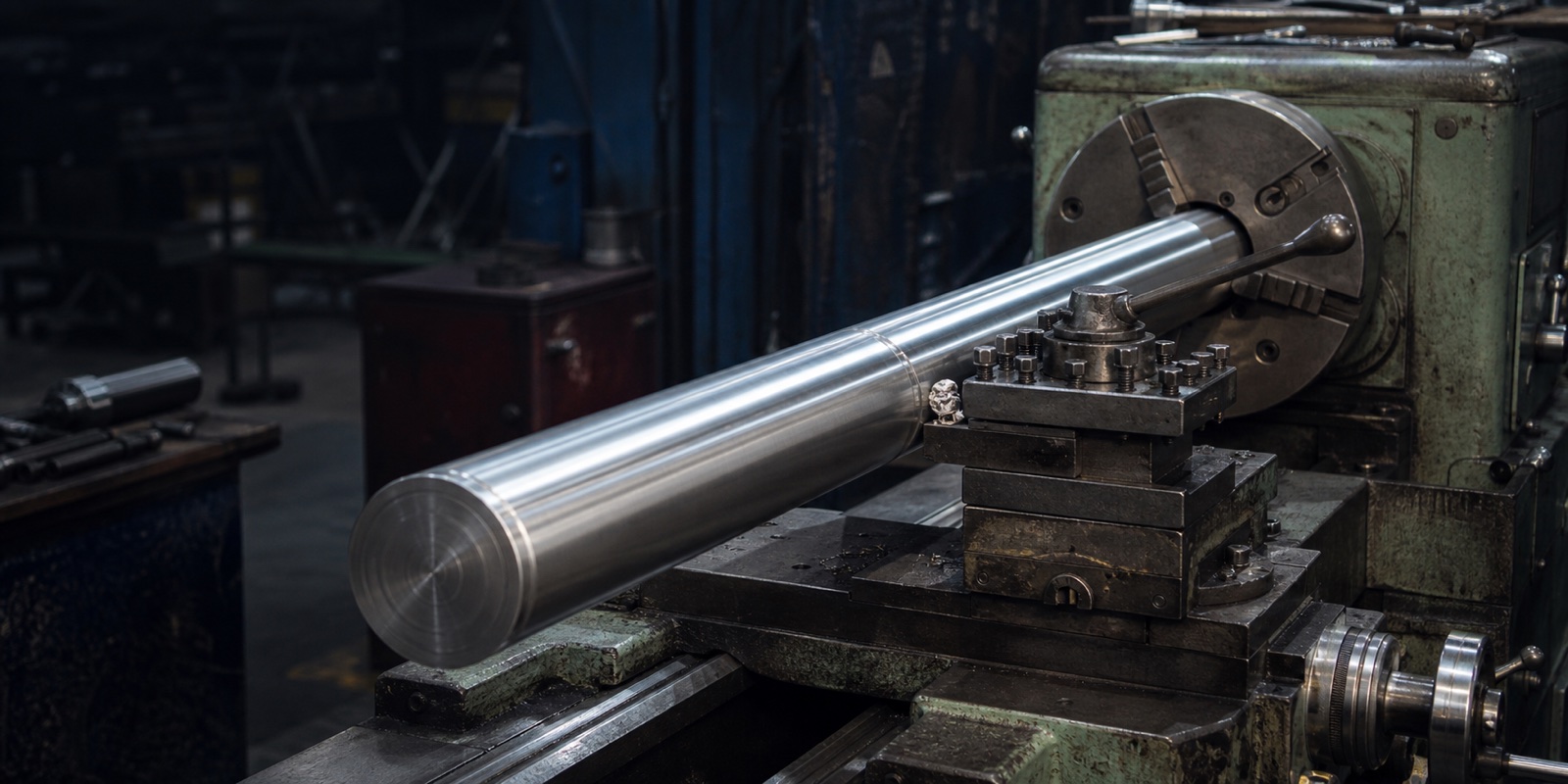
What Bar Turning Does
Turning removes material from the outside diameter of hot-rolled or forged bar. Cut depth is selected to remove scale or surface discontinuities, establish machining allowance, improve roundness, and prepare the bar for polishing, grinding, heat treatment, or final machining.
Rough-turned bar retains stock for another operation. Turned-and-polished bar adds a finishing pass for a smoother surface. Starting diameter, cleanup allowance, finished diameter, tolerance, straightness, and surface limits determine the route.
Potential Benefits
- Scale and surface-discontinuity removal
- Controlled machining allowance
- Improved diameter, roundness, and surface
- Reduced stock removal at final machining
Common Uses
- Shafts and axles
- Hydraulic and bearing components
- Forged or heat-treated blanks
- Precision-machined production parts
Quote Details
Provide the grade, starting diameter and condition, minimum cleanup, finished diameter or machining allowance, tolerance, straightness, surface requirement, lengths, quantity, testing, and any follow-on heat treatment or grinding.
Quote Turned Steel Bar
Include the starting stock, finished diameter or allowance, tolerance, straightness, surface requirement, quantity, and required date.
Request Pricing