1144 vs. 4140 Steel: Round Bar for Machining or Heat Treatment?
1144 prioritizes production machinability through a resulfurized carbon-steel chemistry. 4140 prioritizes alloy hardenability and controlled heat-treated properties.
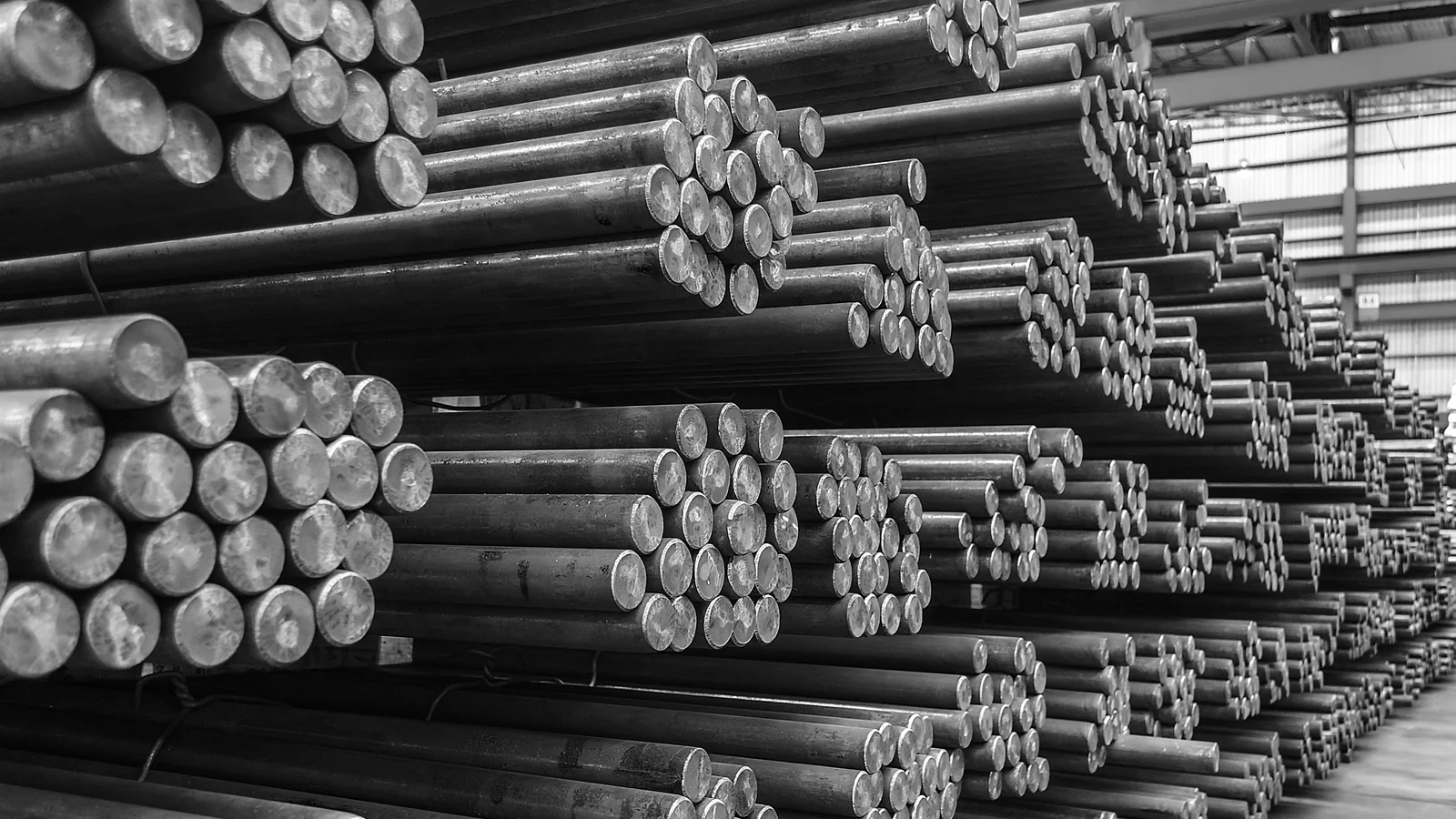
The short answer is that 1144 and 4140 solve different production problems. SAE 1144 is a resulfurized carbon steel commonly considered when machining rate and chip control matter. SAE 4140 is a chromium-molybdenum alloy steel commonly considered when hardenability, heat treatment, and controlled mechanical properties drive the design.
They are not drop-in substitutes. The correct choice depends on the required condition, section size, loading, fatigue exposure, machining route, heat treatment, and governing product specification.
Buyer takeaway: Start with 1144 when the commercial case depends on repeatable production machining and the design accepts a resulfurized grade. Start with 4140 when the part needs the hardenability or heat-treated property route of a low-alloy steel. Quote the exact product condition—not just the four-digit grade.
1144 vs. 4140 at a glance
| Decision | 1144 round bar | 4140 round bar |
|---|---|---|
| Steel family | Resulfurized medium-carbon steel | Chromium-molybdenum medium-carbon alloy steel |
| Common buying priority | Chip control and production machinability | Hardenability and heat-treated properties |
| Typical purchasing question | Which supplied condition will run consistently in the machining cell? | Which annealed or quenched-and-tempered condition will meet the design? |
| Heat-treatment role | Must be reviewed for the exact product and application | Commonly selected for a defined heat-treatment route |
| Design caution | Inclusion structure can matter in fatigue, impact, transverse loading, and welding | Section size, test location, heat treatment, and hardness profile can control acceptance |
| Specification risk | Treating every 1144 bar as a proprietary stress-relieved product | Treating “4140” or “prehard” as a complete mechanical-property specification |
Which grade machines better?
For many turning and screw-machine operations, 1144 is the first grade to evaluate for machinability. SAE J403 identifies it as a resulfurized carbon-steel grade. The sulfur addition supports manganese-sulfide inclusions that can promote chip breaking and reduce cutting forces in an appropriate microstructure.
That is not a guarantee of lower part cost. Delivered hardness, cold work, microstructure, straightness, surface condition, tool geometry, speed, feed, depth of cut, and bar-feed setup all affect the result.
4140 can be machined successfully, but annealed and quenched-and-tempered material do not behave alike. A purchasing comparison should use the actual incoming conditions and measure:
- cycle time and tool life;
- chip control and evacuation;
- surface finish and dimensional repeatability;
- bar-feed behavior and straightness;
- stock allowance, cutoff loss, and usable yield;
- movement after heavy or asymmetric machining.
Which grade is stronger?
There is no useful condition-free answer. The grade designation primarily identifies a chemistry family. It does not establish one universal yield strength, tensile strength, hardness, or fatigue value.
SAE J404 defines the chemistry framework for SAE alloy steels such as 4140. The delivered properties can change substantially with annealing, normalizing, quenching and tempering, bar diameter, test location, and thermal history. ASTM A322-24 covers hot-wrought standard alloy-steel bars, but the purchase order still needs the required condition and acceptance criteria.
1144 also cannot be assigned one property package without its product route and specification. Cold-drawn or stress-relieved material may differ materially from another 1144 product. ASTM A311/A311M, for example, covers cold-drawn, stress-relieved carbon-steel bars subject to mechanical-property requirements within that standard’s scope.
Compare certified properties for the ordered diameter and condition rather than a generic online chart.
Is 1144 the same as Stressproof?
No. Stressproof® is a proprietary product associated with a controlled cold-drawing and stress-relief process. Niagara LaSalle’s product information explains that process and its intended combination of strength, machinability, and dimensional stability.
SAE 1144 chemistry alone does not automatically specify that trademarked product or its mechanical-property requirements. If a drawing calls for Stressproof®, keep the exact designation in the RFQ. If it calls for generic 1144, state the applicable product standard, condition, properties, tolerances, straightness, and testing requirements.
When 4140 is the better starting point
4140 is usually the more relevant starting point when the design depends on alloy hardenability or on a defined quenched-and-tempered property level. This can matter in larger sections and in components where the hardness and mechanical-property profile must be controlled through the cross-section.
The RFQ should distinguish annealed material from quenched-and-tempered material. “Prehard” is commercial shorthand and can refer to different hardness ranges, testing bases, or size limits. See the detailed guide to 4140 annealed vs. prehard round bar.
Do not assume that 4140 automatically meets a strength target simply because the grade is alloyed. State the required properties, hardness range, test location, section size, and governing standard.
When 1144 is the better starting point
1144 deserves evaluation when a repeat production job is heavily driven by turning time, chip handling, bar-feed reliability, and tool consumption. On truckload programs, small differences in seconds per part or usable yield can outweigh a simple price-per-pound comparison.
The application still has to accept the metallurgical tradeoffs of a resulfurized grade. Fatigue-critical, impact-loaded, severely formed, welded, or transverse-loaded parts need engineering review using properties and test orientation appropriate to the design.
Can one replace the other?
Only with engineering approval and a revised purchasing specification.
Replacing 4140 with 1144 may improve machining economics but removes the assumption of 4140 hardenability and changes the fatigue, heat-treatment, and welding review. Replacing 1144 with 4140 may meet a strength objective in a chosen condition but can change cycle time, chip behavior, tooling, distortion, and total conversion cost.
A substitution review should compare:
- required mechanical properties and hardness;
- part geometry and maximum ruling section;
- longitudinal and transverse loading;
- fatigue, impact, and surface-integrity requirements;
- machining cell, tooling, and target cycle time;
- heat treatment, straightening, grinding, and final inspection;
- product standard, bar condition, diameter tolerance, and straightness;
- certification, traceability, and testing requirements.
Product form can decide the order
ASTM A108-24 covers cold-finished carbon and alloy steel bars for uses that include machining and heat treatment. It does not make every cold-finished 1144 or 4140 order equivalent. The buyer must still define the grade, condition, size, tolerances, and any supplementary requirements.
For a production-bar quote, specify whether the bar is hot rolled, cold drawn, turned, ground, annealed, stress relieved, or quenched and tempered. Include:
- diameter, length, total quantity, release quantity, and quantity tolerance;
- diameter tolerance, ovality, straightness, surface, and end condition;
- required mechanical properties, hardness, test location, and lot basis;
- decarburization or surface-discontinuity limits when applicable;
- MTR, heat traceability, marking, and supplemental inspection;
- downstream machining, heat treatment, welding, and finished-part context;
- delivery schedule and ship-to requirements.
Review the 1144 and 4140 grade pages before sending the complete production scope through Request Pricing.
Source Record
Primary and industry sources reviewed for this article:
- SAE J403_202402: Chemical Compositions of SAE Carbon Steels SAE International · Accessed September 6, 2026
- SAE J404_200901: Chemical Compositions of SAE Alloy Steels SAE International · Accessed September 6, 2026
- ASTM A108-24: Steel Bar, Carbon and Alloy, Cold-Finished ASTM International · Accessed September 6, 2026
- ASTM A311/A311M-04(2020): Cold-Drawn, Stress-Relieved Carbon Steel Bars ASTM International · Accessed September 6, 2026
- ASTM A322-24: Steel Bars, Alloy, Standard Grades ASTM International · Accessed September 6, 2026
- Stressproof Facts Niagara LaSalle Corporation · Accessed September 6, 2026
Carbon & alloy round bar
Quote the Exact Material Requirement
Send the grade or specification, diameter and length, supply condition, quantity, testing, required date, and ship-to location for review.
Request a Quote