4140 Annealed vs. Prehard Round Bar: Specify the Supplied Condition
“4140 prehard” is commercial shorthand, not a complete acceptance requirement. Buyers need to define whether bar is annealed or quenched and tempered, then state the controlling properties and test basis.
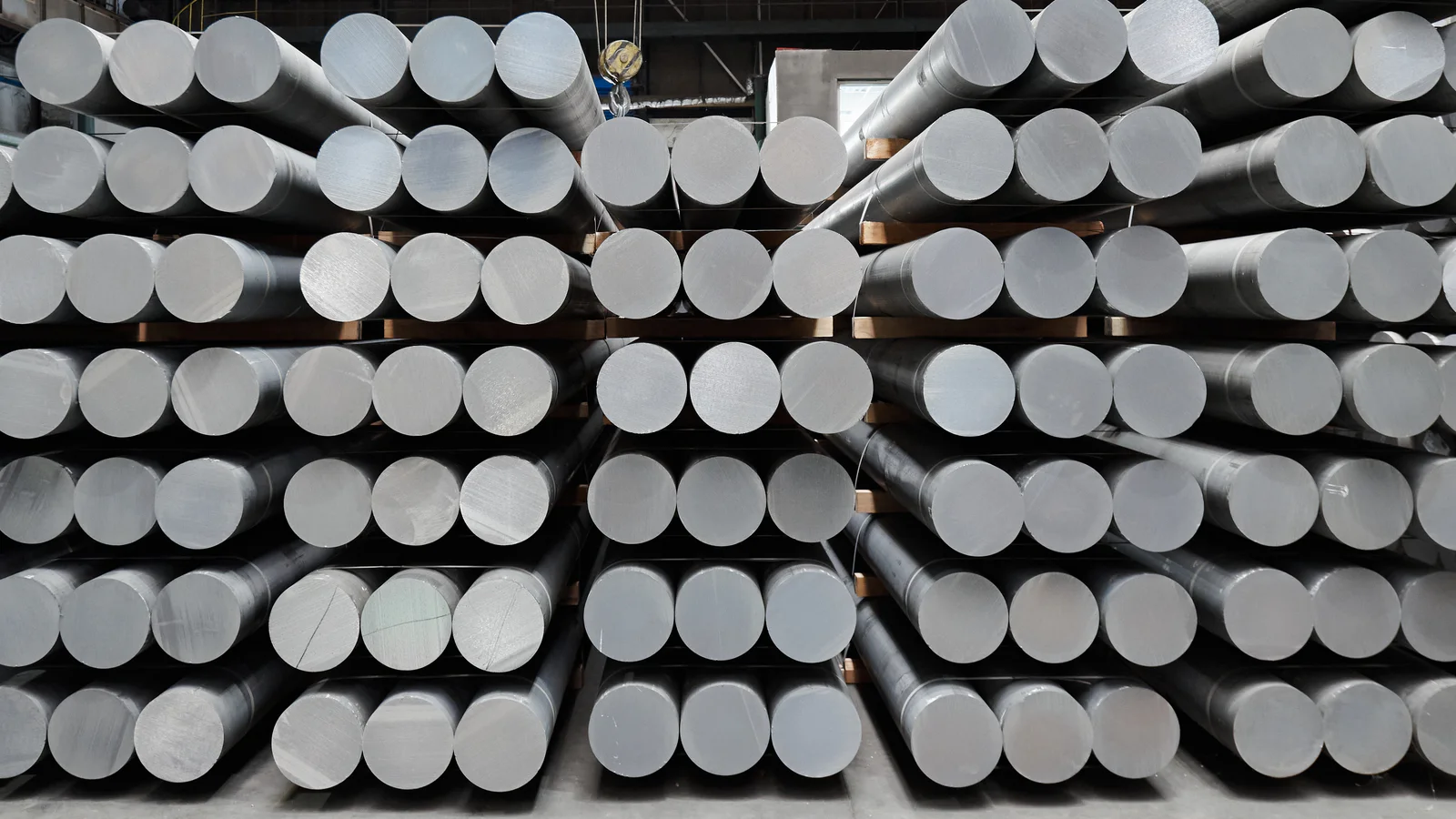
The practical difference is who develops the final properties and when. Annealed 4140 is softened for machining or later heat treatment. “Prehard” 4140 has already been heat treated to a commercial hardness or property range before machining.
The term “prehard” is not precise enough for a purchase order. Suppliers may use it for different quenched-and-tempered products, hardness ranges, size limitations, or test bases. Define the governing specification and acceptance values.
Buyer takeaway: Order annealed 4140 when downstream manufacturing will establish the final heat-treated condition. Order quenched-and-tempered 4140 when the bar must arrive with controlled properties—but replace shorthand with an exact property class, hardness range, section, and test location.
Annealed vs. prehard 4140 at a glance
| Decision | Annealed 4140 | Quenched-and-tempered or “prehard” 4140 |
|---|---|---|
| Incoming condition | Softened for machining or later processing | Heat treated before delivery |
| Property responsibility | Often established later by the part processor | Must be established and documented at the bar stage |
| Machining | Generally lower incoming hardness | Higher hardness can change tooling, speed, and stock-removal strategy |
| Distortion planning | Final heat treatment can move the machined part | Heavy machining can release residual stress in an already heat-treated bar |
| RFQ focus | Annealed condition, surface, tolerance, and later process | Exact property/hardness range, size limits, test location, and certification |
4140 chemistry is not a hardness specification
SAE J404 defines SAE alloy-steel chemistry designations. It does not make all 4140 bar mechanically identical. Annealed, normalized, and quenched-and-tempered 4140 can have very different hardness, tensile properties, microstructure, and machining response.
If the RFQ says only “4140,” a quote may cover chemistry without the condition the buyer expected. If it says “4140 prehard,” the target can still be ambiguous.
When annealed 4140 makes sense
Annealed bar is commonly evaluated when:
- the part will be heavily rough-machined before heat treatment;
- the final section or geometry needs its own qualified thermal cycle;
- forging or forming occurs downstream;
- the manufacturer wants to manage final hardness and distortion;
- lower incoming hardness improves the planned machining route.
ASTM A322-24 covers hot-wrought standard alloy bars and recognizes supplemental requirements when specified. The buyer still must state the required condition and product details.
When quenched-and-tempered bar makes sense
Heat-treated bar may reduce downstream processing when the finished part can be machined from a controlled incoming condition. It may also establish a documented property package at the bar stage.
ASTM A434/A434M-24 covers defined classes of hot-wrought and cold-finished quenched-and-tempered alloy steel bars within its scope and size limitations. Cite the exact standard, class, size, and required tests instead of using “prehard” alone.
Diameter and test location matter
A hardness reading at the surface does not automatically represent the center of a large round. The bar diameter, heat-treatment section, chemistry within range, quench, temper, and specimen location all influence the property result.
For heat-treated bar, identify:
- ordered diameter and maximum ruling section;
- property class or hardness range;
- test specimen location and orientation;
- lot definition and testing frequency;
- straightness and decarburization requirements;
- surface removal before testing when applicable;
- MTR fields and supplemental reports.
Machining and dimensional stability
Annealed material can improve rough-machining productivity, but the component must still allow for movement and cleanup after final heat treatment. Heat-treated bar eliminates that later bar-level cycle, but its incoming hardness changes tooling and cutting data.
Both routes can move during asymmetric stock removal. For shafts and long components, discuss straightness, bar length, roughing sequence, stress relief, finish allowance, and grinding after heat treatment.
A complete 4140 condition RFQ
Provide:
- SAE 4140 plus the governing product specification and revision.
- Annealed, normalized, or exact quenched-and-tempered class/condition.
- Required hardness and mechanical properties with test basis.
- Diameter, length, quantity, and release pattern.
- Surface route, tolerance, straightness, decarburization, and ends.
- Heat-treatment section, specimen location, and lot testing.
- MTR, traceability, marking, and supplemental inspection.
- Downstream machining, heat treatment, and finished-part context.
The 4140 purchasing guide covers the wider order package. When the supplied condition is defined, submit it through Request Pricing.
Source Record
Primary and industry sources reviewed for this article:
- ASTM A322-24: Steel Bars, Alloy, Standard Grades ASTM International · Accessed August 13, 2026
- ASTM A434/A434M-24: Alloy Steel Bars, Quenched and Tempered ASTM International · Accessed August 13, 2026
- SAE J404_200901: Chemical Compositions of SAE Alloy Steels SAE International · Accessed August 13, 2026
Carbon & alloy round bar
Quote the Exact Material Requirement
Send the grade or specification, diameter and length, supply condition, quantity, testing, required date, and ship-to location for review.
Request a Quote