4140 vs. 4340 Steel: Round Bar Comparison for Industrial Buyers
4140 is a chromium-molybdenum alloy steel; 4340 adds a nickel-bearing alloy route with greater hardenability potential. Condition, section size, properties, and specification decide the order.
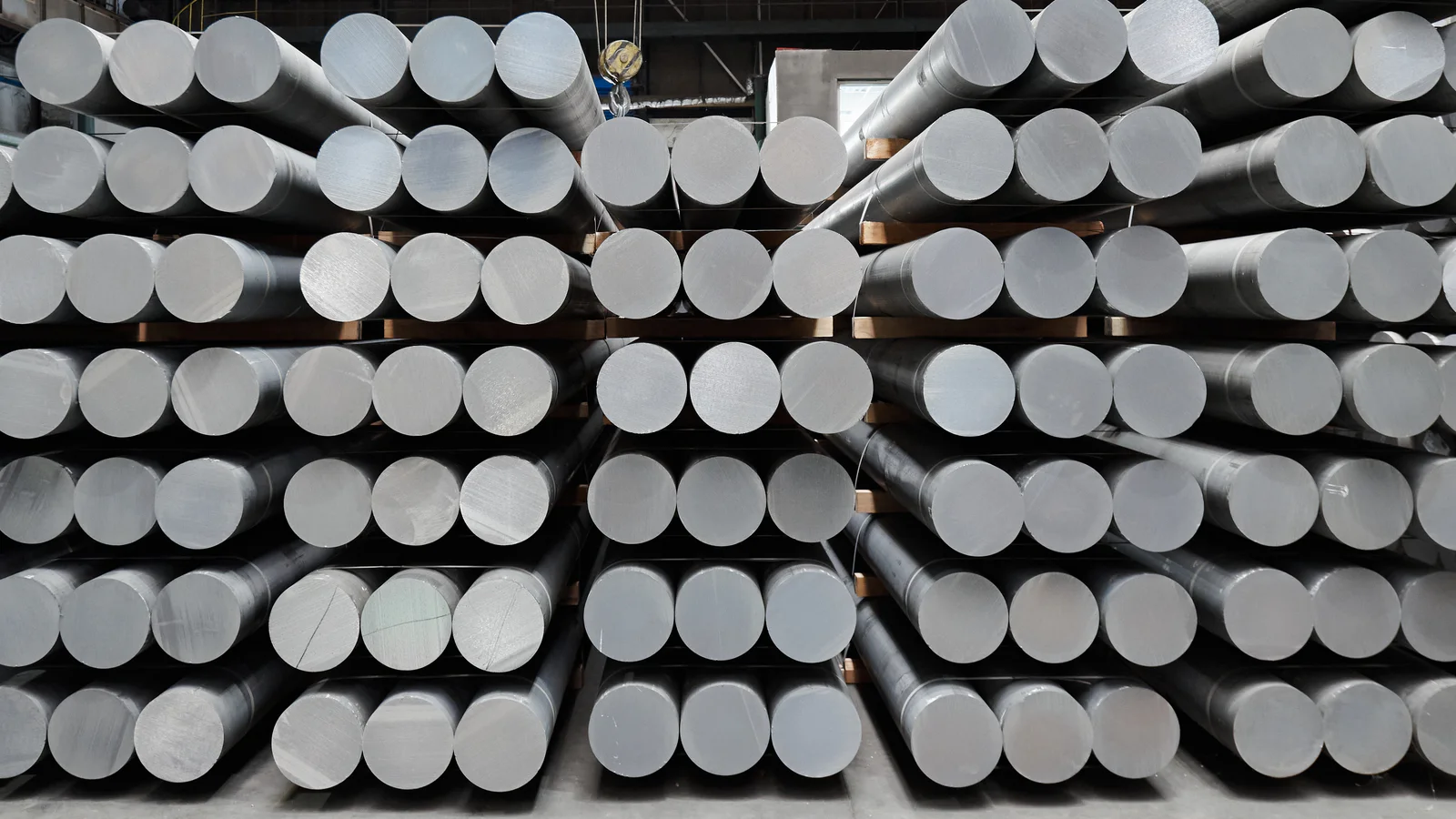
Buying material for an upcoming order?
Quote this requirementThe short answer: 4140 is a chromium-molybdenum alloy steel, while 4340 uses a nickel-chromium-molybdenum alloy system with greater hardenability potential. Buyers often evaluate 4340 for highly loaded or larger-section parts where toughness and through-section response are critical. That does not make 4340 an automatic upgrade for every 4140 application.
The delivered condition controls the useful comparison. Annealed 4340, quenched-and-tempered 4140, and chemistry-only hot-rolled bars are three different purchasing scopes. A production RFQ should define the grade, product specification, diameter, heat-treatment condition, property level, test location, inspection, and certification.
Buyer takeaway: Use the least-complex material route that fully meets the drawing and service requirements. Evaluate 4340 when its nickel-bearing chemistry and hardenability are needed for the specified section and property package—not simply because its name appears above 4140 in a strength chart.
4140 vs. 4340 at a glance
| Buyer question | 4140 round bar | 4340 round bar |
|---|---|---|
| Alloy family | Chromium-molybdenum | Nickel-chromium-molybdenum |
| Main selection issue | Whether the required section and properties can be met with the 41XX route | Whether greater hardenability and toughness potential are required |
| Typical purchasing routes | Annealed, normalized, or specified quenched-and-tempered conditions | Annealed or specified heat-treated conditions for demanding parts |
| Section-size planning | Strong hardening response, but actual result remains section- and process-dependent | Commonly evaluated for deeper and more uniform response in demanding sections |
| Cost comparison | Usually the simpler alloy route | Nickel content and processing can increase material and conversion cost |
| Substitution | Not automatically interchangeable with 4340 | Not a drop-in “upgrade” without engineering approval |
What is the difference between 4140 and 4340?
SAE J404 identifies the chemical-composition requirements for SAE alloy steels. Both 4140 and 4340 are alloy-steel designations, but they use different alloy systems. 4340’s nickel addition is central to why it is evaluated for combinations of high strength, toughness, and hardenability.
Chemistry is only the starting point. Neither grade number guarantees a delivered hardness, tensile strength, yield strength, impact result, cleanliness level, or ultrasonic quality. Those requirements come from the governing product specification and the ordered condition.
Is 4340 stronger than 4140?
Not in every supplied condition. A grade name describes chemistry; strength is developed and verified through processing and testing. An annealed 4340 bar can have lower delivered hardness than a quenched-and-tempered 4140 bar. The meaningful comparison places both grades at defined conditions and property levels.
For heat-treated bar, specify:
- the controlling ASTM, AMS, customer, or drawing requirement;
- bar diameter and heat-treatment section;
- required tensile, yield, elongation, reduction of area, hardness, or impact values;
- specimen location and orientation;
- heat-treatment lot and test frequency;
- straightness, decarburization, surface, and machining allowance;
- required MTR and supplemental reports.
ASTM A434/A434M-24, for example, covers hot-wrought and cold-finished quenched-and-tempered alloy steel bars within its defined classes and size limits. A purchase order must cite the actual standard and required class rather than request “4140 heat treated” or “4340 prehard” without a property basis.
Hardenability is not the same as hardness
Hardenability describes how deeply a steel can develop hardness under a defined quench, not how hard one delivered bar happens to be. ASTM A255 describes the end-quench or Jominy method for measuring hardening response as distance from the quenched end.
4340’s alloy system generally provides greater hardenability than 4140. That can matter as diameter increases or when the design needs properties farther below the surface. The actual center response still depends on chemistry within the permitted range, prior structure, austenitizing, quench severity, tempering, geometry, and test location.
When hardenability controls, state whether the order invokes an H-grade, an end-quench band, a customer limit, or finished mechanical properties. Do not use a generic hardenability curve as an acceptance requirement unless the purchase specification identifies it.
Which grade is tougher?
4340 is commonly evaluated where toughness must be retained at a high strength level. That statement is a reason to investigate the grade, not proof that a particular 4340 order will pass an impact or fracture requirement.
If toughness controls the component, define the actual test method, specimen orientation, location, temperature, acceptance value, heat-treatment condition, and lot representation. Steel cleanliness, section size, grain structure, and processing history can be as important as the four-digit grade.
Large-diameter round bar considerations
Larger round sections amplify heat-treatment and inspection questions. The surface and center experience different cooling histories, and a small qualification coupon may not represent the full section unless the specification says it does.
For large 4140 or 4340 round bar, buyers should address:
- maximum heat-treatment section and test location;
- property requirements at the controlling diameter;
- straightness after heat treatment;
- decarburization and surface-removal allowance;
- center soundness and the need for ultrasonic testing;
- cleanliness, grain-size, macroetch, or other supplemental controls;
- machining stock and final part orientation within the bar.
The ultrasonic-testing guide explains why “UT tested” is incomplete without a method, class, scan coverage, and acceptance criteria.
Machining 4140 vs. 4340
Machining behavior depends heavily on hardness and microstructure. Compare both grades in the condition that will reach the machine—not by grade name alone. Annealed stock, normalized stock, and quenched-and-tempered stock can require different tooling, cutting data, and stock-removal plans.
For a production program, include:
- incoming hardness or property range;
- bar surface and diameter tolerance;
- straightness and length;
- rough-machining and finish-machining sequence;
- heat treatment before or after machining;
- stock movement after asymmetric removal;
- grinding allowance and final surface requirements.
The more expensive bar may reduce downstream risk if it is tied to the correct condition and test package. It can also add unnecessary cost if the design does not require its alloy route.
Welding considerations
Neither 4140 nor 4340 should be approved for a welded component from a web comparison. Alloy content, carbon level, section size, restraint, supplied strength, hydrogen control, preheat, interpass temperature, filler, and post-weld heat treatment all affect the procedure.
4340’s alloy system and the high-strength conditions in which it may be used demand especially careful engineering review. 4140 also requires a qualified, condition-specific welding plan. If welding is part of the manufacturing sequence, identify it on the material inquiry.
What do 4140 and 4340 cost?
4340 commonly carries a higher alloy cost, but purchase price per pound is only one part of the comparison. Diameter, production quantity, mill route, condition, testing, heat treatment, machining yield, freight, and release pattern can change the total cost.
Quote technically equivalent scopes. A chemistry-only 4140 bar is not comparable to a heat-treated 4340 bar with mechanical testing, ultrasonic examination, and supplemental reports.
RFQ checklist for 4140 or 4340 round bar
Provide:
- Exact grade and governing specification with revision.
- Solid round bar form, surface route, and supply condition.
- Diameter, length, pieces or weight, and quantity tolerance.
- Required property level tied to section and test location.
- Diameter, ovality, straightness, surface, and end requirements.
- Heat-treatment responsibility and any process restrictions.
- Hardenability, impact, cleanliness, grain-size, UT, or other supplemental controls.
- MTR, heat or lot traceability, marking, and required reports.
- Downstream forging, machining, heat treatment, or welding context.
- Required date, release pattern, and ship-to location.
Review the 4140 round bar and 4340 round bar grade pages for order-planning context. When the specification is settled, submit the full requirement through Request Pricing.
Source Record
Primary and industry sources reviewed for this article:
- SAE J404_200901: Chemical Compositions of SAE Alloy Steels SAE International · Accessed August 13, 2026
- ASTM A322-24: Steel Bars, Alloy, Standard Grades ASTM International · Accessed August 13, 2026
- ASTM A434/A434M-24: Alloy Steel Bars, Quenched and Tempered ASTM International · Accessed August 13, 2026
- ASTM A255-20: Determining Hardenability of Steel ASTM International · Accessed August 13, 2026
Carbon & alloy round bar
Quote the Exact Material Requirement
Send the grade or specification, diameter and length, supply condition, quantity, testing, required date, and ship-to location for review.
Request Pricing